There was a time when a night out was measured by how many drinks you had. Today, increasingly, it is being measured by how deliberately you drink them.
Enter zebra striping—the practice of alternating between alcoholic and non-alcoholic drinks during a single occasion. A cocktail might be followed by a zero-proof serve, then a glass of wine, followed by sparkling water or an alcohol-free botanical drink. The objective isn't necessarily to stop drinking. It is to drink differently. 1. Why "Zebra"? The name comes from the alternating pattern: alcoholic, non-alcoholic, alcoholic, non-alcoholic—much like the contrasting stripes of a zebra. It is a simple behavioral change, but one that reflects a much bigger shift taking place in global drinking culture. Consumers are increasingly interested in moderation rather than total abstinence. For many, the choice is no longer binary. There is a growing middle ground where people want the ritual, flavor, sociability, and experience of drinking without necessarily consuming alcohol continuously throughout the evening. 2. It’s Not Quite Dry January This is what makes zebra striping particularly interesting. Dry January, Sober October, and other alcohol-free challenges are generally about eliminating alcohol for a defined period. Zebra striping takes a different approach: alcohol remains part of the occasion, but it is deliberately interspersed with non-alcoholic options. That makes the behavior far easier to incorporate into everyday social life. A guest might begin with a Martini, switch to a sophisticated zero-proof serve during dinner, have a glass of wine with the main course, and finish with a highball or soda and bitters.The evening doesn't have to become "alcohol-free" to become significantly lower in alcohol. 3. The Opportunity for Bars This is where the trend becomes relevant to hospitality. For years, non-alcoholic drinks were treated as an afterthought—essentially an apology offered to the designated driver. That paradigm is disappearing. A zebra-striping consumer still expects theatre, flavor, high-grade ice, and top-tier hospitality. They do not want a generic cola or lime soda simply because they are taking a break between cocktails. This creates an opening for bars to build serious zero-proof programs. 4. The Rise of the "Second Drink" There is another financial implication for venues. The first drink has traditionally been the easiest to sell, while subsequent orders determine venue spend and guest pacing. Zebra striping changes the standard consumption sequence:
5. A Strategic Challenge for Beverage Brands The trend also creates an interesting dilemma for global alcobev brands. If consumers are alternating between alcohol and zero-proof options, brands must participate in both sides of the occasion. This is already driving the expansion of no- and low-alcohol beers, wines, and spirits. However, the challenge goes beyond launching a zero-proof line extension. The broader question is: How does a brand remain culturally relevant when the consumer chooses not to consume alcohol with every order? It requires thinking beyond the bottle and managing the entire social occasion. 6. Moderation Is Becoming Social Perhaps the biggest shift is cultural. For decades, refusing a drink often required an explanation: "I have an early morning," "I'm driving," or "I'm taking a break." Zebra striping makes moderation less conspicuous. Everyone at the table can hold a complex, garnishing-rich drink without anyone being singled out as the "non-drinker." Belonging, ritual, and participation remain intact. The emerging consumer doesn't want to leave drinking culture—they want to redefine their place within it. The Indian Opportunity India’s cocktail bars, premium spirits, and experiential hospitality sectors are expanding rapidly. At the same time, urban consumers are becoming far more conscious of wellness and pacing. For Indian bars and restaurants, zebra striping represents a direct menu-design opportunity. Imagine a cocktail menu that explicitly maps out a pairing journey:
The Happy High’s Take The future of social drinking isn't binary—it isn't Drink vs. Don't Drink. The real question consumers are asking is: How do I want to drink tonight? For the beverage industry, that is a far more compelling conversation. The winning venues and brands won't be those that push higher volume, but those that give consumers better reasons to stay engaged—regardless of what is in the glass.
0 Comments
 Walk into almost any luxury hotel in India today and one thing is immediately apparent—the beverage programme has never looked stronger. There are Japanese whiskies locked behind glass cabinets, rare single malts commanding five-figure price tags, wine lists that stretch across continents, and cocktail menus inspired by local ingredients, forgotten classics and molecular gastronomy. Then you ask for a beer !
More often than not, the choices become surprisingly ordinary. For an industry that prides itself on offering curated luxury experiences, India's finest hotels continue to treat beer as an afterthought. Not because consumers aren't interested, but perhaps because the industry still are looking at cases and schemes more than the liquid itself. Luxury has never been about price alone. It has always been about scarcity, craftsmanship, provenance and storytelling. By that definition, craft beer checks every box. A barrel-aged stout matured for twelve months, a Gose with kokum, or a limited-release IPA brewed with fresh seasonal hops involves as much technical precision and creative intent as many premium wines or spirits. Yet while sommeliers have become central to luxury hospitality, beer continues to occupy the last page of the menu. This isn't simply about adding more labels. It is about recognising that beer has evolved while hotel beverage programmes have not. The irony is that India's craft brewing industry has arguably matured faster than the hospitality industry's perception of it. Cities such as Bengaluru, Pune, Goa and Gurugram have produced breweries capable of creating beers that would not feel out of place in respected international taprooms. Brewers are experimenting with barrel maturation, mixed fermentation, indigenous ingredients and small-batch releases—concepts that luxury hotels enthusiastically celebrate in wine and whisky. Yet those same beers rarely make it into five-star restaurants. Instead, hotel buyers often default to familiarity. The logic is understandable. Beer is seen as a high-volume category driven by recognisable brands rather than guest discovery. But luxury hospitality has never been built around the safest choice. It has been built around offering experiences guests cannot easily recreate elsewhere. That is precisely where craft beer excels. Imagine pairing a Goan witbier with oysters, a smoky imperial stout with chocolate dessert, or a farmhouse ale with a chef's tasting menu. These are not radical ideas. They have become standard practice in some of the world's leading restaurants. Michelin-starred establishments across Europe and North America have embraced beer pairings alongside wine, recognising that beer's diversity often makes it the more versatile partner at the table. India, meanwhile, continues to ask whether beer belongs in fine dining. The Challenge Isn't Demand. It's Distribution. To be fair, luxury hotels aren't entirely responsible for craft beer's absence. India's excise framework makes it exceptionally difficult for independent breweries to scale. Unlike wine or spirits, craft beer is often produced for local consumption and, in many states, cannot move freely across state borders because of excise restrictions, licensing hurdles and high logistics costs. As a result, a brewery in Bengaluru cannot simply supply a hotel in Mumbai, nor can a Goa-based brewer easily reach Delhi. Every state operates under its own excise regime, making nationwide distribution expensive and, in some cases, practically impossible. This means hotels in certain cities genuinely have fewer options. But that explanation only goes so far. India's major metropolitan markets—including Bengaluru, Mumbai, Pune, Gurugram, Hyderabad and Goa—already have thriving craft brewing ecosystems. These cities are home to breweries producing fresh lagers, hop-forward IPAs, Belgian-style ales, wheat beers and experimental seasonal releases that are more than capable of meeting luxury hospitality standards. Ironically, these breweries often enjoy greater visibility in neighbourhood gastropubs than they do in five-star hotels located just a few kilometres away. The limitation, therefore, is not simply one of supply. In many of India's largest hospitality markets, it is equally a question of perception. Luxury hotels have invested heavily in educating guests about wine, whisky and cocktails. Craft beer deserves the same thoughtful curation—not because every property should stock dozens of labels, but because where quality local breweries exist, they should be viewed as partners in creating authentic, destination-led beverage experiences rather than as alternatives to mainstream beer. 
Wine & Spirits Media in India, more platforms will see lightIndia’s wine and spirits industry is evolving rapidly. Premium bars are expanding, global brands are entering the market, and consumer awareness is steadily improving. Yet, one critical gap continues to exist — the lack of enough structured, credible, and industry-led beverage media. While information today is abundant, clarity is not. The difference between noise and knowledge is what defines a mature market. Beyond Listings and PromotionsMuch of the current beverage content ecosystem is driven by listings, promotional posts, or surface-level features. While these serve a purpose, they rarely contribute to long-term understanding of categories, products, or industry dynamics. For a market as complex as India — with evolving regulations, diverse consumer behaviour, and fragmented distribution — deeper, more structured communication becomes essential. Why the Industry Needs Thought-Led ContentA strong beverage ecosystem requires: • Category education across wine, spirits, and cocktails • Insight into global trends adapted to Indian realities • Product understanding beyond pricing and availability • Structured knowledge for both professionals and consumers Without this layer of understanding, growth remains transactional rather than sustainable. Bridging Industry, Professionals, and ConsumersThe future of beverage media in India lies in bridging three key stakeholders: • Brands seeking informed positioning • Hospitality professionals driving on-ground experiences • Consumers looking for clarity and confidence in their choices A platform that can connect these layers through structured content, education, and insights becomes more than just media — it becomes an industry enabler. A More Structured Approach to Beverage CommunicationThe next phase of growth in India’s wine and spirits space will not be driven by visibility alone, but by understanding. This requires: • Educational frameworks that simplify complex categories • Insights that are relevant to the Indian market • Consistent communication across formats — articles, tastings, and training • A long-term view on building category awareness When knowledge becomes accessible and structured, it naturally translates into better consumption, stronger brands, and a more confident industry. The Role of Integrated PlatformsIn global markets, leading beverage ecosystems are supported by platforms that combine education, consulting, and media. India is now at a stage where similar integrated approaches are becoming increasingly relevant. Such platforms do not operate in silos. They build credibility through education, apply knowledge through consulting, and share insights through structured content. Final PerspectiveAs the Indian beverage industry matures, the role of informed, credible, and consistent communication will only grow in importance. The shift from promotional noise to structured knowledge is not just desirable — it is inevitable. 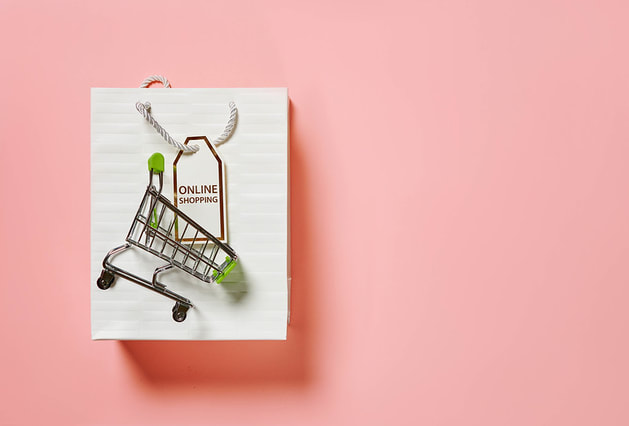 Wine & Spirit sales saw a slight decline in the early phase of the first lockdown but since then it has been an upward trajectory, thanks for liquor delivery being permitted in key states, latest to the list being Delhi. All it needed was technology to bridge the gap between the retailers and the consumers, multiple apps or websites were born as a result. Here are some liquor delivery apps/websites operating in Mumbai, Maharashtra.
Bottleofluid Living Liquidz Liquid Library Nature’s Basket (wine and beer only) Spiritzone The Wine Park (wines only) TullyGully Please note: Be careful while doing online financial transactions as there are rising cases of frauds related to liquor delivery. Verify carefully. And yes, once you get it delivered, do not forget to drink in moderation and responsibly.  A cold dense black coffee like infusion with a fine creamy foam or head on top is what comes to your mind when you think of a stout beer. So, what is a Stout? A Stout is a top-fermented beer or an ale which is typically made using roasted unmalted barley and often with adjuncts like oatmeal etc added. The classic aromas of a stout include coffee, chocolate with hops in the background. Going against its looks, a Stout is not that bitter but is on the sweeter side relatively speaking in terms of beers. Indians have taken up to stout very well, perhaps it all started with the Irish Guinness and then the microbreweries took it even higher so much that we now have stouts in bottles made by Indian producers. Here are the Indian Stout Beers in bottle Simba Stout Creamy, Espresso, Ebony, Bold are the adjectives the company uses to describe their stout. It is again light bodied relatively with 5% alcohol.  Bira Malabar Stout
The Malabar Stout beer from Bira mimics a cold brew coffee with alcohol. It has 4.5% alcohol and is much lighter than traditional stouts. They use coffee beans from the Malabar hills in India and hence the name. Sounds like a good beer to induct a coffee lover into the beer world. Goa Brewing Cos Breakfast Cereal Stout This one has a different take on a traditional stout with a different grainbill. This one had rice puffs, oats, corn flakes as the base of the beer and you now understand where the nomenclature comes from. They also add adjuncts like chocolate and lactose to the mix and bottle it at 4.5 percent alcohol Briggs Brewery Stout Alchemy A full bodies Irish stout, it exudes aromas of caramel, coffee and chocolate and will moderate bitterness from the hops. This will be released short in the market  Mumbai, India Wheat beers are favourites in the craft beer scene in India because of their fruitiness and low IBU (International bittering units) typically. So, what is a wheat beer? Wheat beers use a higher amount of wheat than barley to produce beers and because of the higher protein content in the former the beers are hazy but give a richer and thicker mouth feels to the beers. The wheat unlike malted barley doesn’t add much flavour of its own to the final product and hence the yeast plays a very important role for flavour. In the India the two most popular style of wheat are the Hefeweizen and Belgian Wit. We will look at them both individually and list Indian brands in bottles for you apart from one American Styled Wheat.  Belgian Wit bier Wit bier is made of minimum 50% unmalted wheat in Belgium which makes them different from the German style in addition to the flavouring of Coriander and Orange peel the Belgians add to this style. They could add more spice but the above mentioned are the basics. This style was revived globally and in India by Hoegaarden specially with their ritual of adding an orange slice into the glass. Kingfisher: The latest entrant in the India’s bottled non-lager segment, Kingfisher the market leader in beers is all set to ride the craft wave with this wit bier. Simba: Apart from the classic Coriander and Orange peel, the Simba roars with some added goodness of Lemongrass. Mad King Dufa: This one was thought of in Delhi but made in Belgium. The other one from the brewery is a lager call the Kolga. White Owl Spark: It started off as a microbrewery in Mumbai and continues to but has also added to bottled fare. Bira White: The craft behemoth which started the wave for bottled craft beer in the country continues to grow. White Rhino: India’s first craft brewery in the bottled business, they also flavour their wit bier with Himalayan coriander. Mahou Maestra Wheat: Although owned the Spanish Mahou, this one’s made in Indian and used Himalayan Coriander and Seville orange peel for the brew. Willy's Witbier: The latest entrant in the bottled witbier segment, the Will's by Briggs Brewery Bengaluru is now launched in the Bengaluru market.  Hefeweizen: This German cloudy wheat beer has aromas of banana and cloves owing to the yeast so much that it can’t be handled by many palates and hence a slice of lemon can help uplift. It can be made with made with both malted and unmalted wheat. In Germany Hefe come from yeast or beer with yeast that is typically unfiltered and that is showcased by Weihenstephan which claims to be oldest brewery in the world through their beers. Thirsty Simona: This one’s a Indian co but they brew in Bosnia under Alex their brew master. American Wheat Beer This style is America’s take on the traditional Bavarian Hefeweizen but without the spice. The beers are summer beer which are thirst quenching with great balance of malts and hops. The bittering units are low and so are the hops. The style has been making waves and become mainstream over the last one decade. Arbor Easy Rider: An easy drinking beer for the tropical weather with good balance of hops and malt. Hence the name perhaps! Read More: Imported Wine Brands in India with Mumbai Prices, grape wise, price wiseMumbai, India IPA or India Pale Ale was created for India, not for Indians bur for the British Colonists in India. The British got their ration of beer directly shipped from England; however, a lot of beer was spoilt during the long and arduous sea voyage. To overcome this, the brewers started to work on different ingredients and then finally decided to harness the power of two ingredients which were already a part of the beer, Hops the flavouring agents in beer and alcohol the by product of fermentation. They made a more alcoholic beer and hopped them more than usual. When the beer reached Indian, it wasn’t spoilt, it was more aromatic, and it was bitter. The soldiers loved it and Voila, the India Pale Ale was created.  IPA’s have got popular in India over the last decade majorly owing to the craft beer scene in India, and we heard recently about Kimaya brewing co based out of Pune created the ‘IPA Divas by the Pune Beer Mandal’ , translates from Marathi to ‘IPA Day by the Pune Beer Association’. It just reiterates the increasing popularity for the beer category; however, IPA is not for all; specially the Indian palate. The bitterness is the hurdle and hence most brewers keep the IBU (international bittering units) relatively low. low for the Indian palate. IPA hence has flourished in our opinion and now also coming in bottles for those who do not have access to brew pubs around them.  Here the 4 Indian IPA beer brands:
Bira IPA: The Bira version of how Indian would love an IPA. This one is brewed with pomelo and is very zest and citrusy. It used a blend of barley and wheat and is flavoured with Citra and Mosaic hops. White Rhino: At 40 IBU the bitterness is very controlled. The brand uses Ahtahnum, Cascade, Mosaic and Styrian Goldings hops for their brew. Arbor Beach Shack IPA: They call it a session IPA, session refers to low alcohol beers this IPA at 6 is much lower than traditional IPAs. Citra and Centennials hops give it that aromatic thrust. Eight Finger Eddie by Goa Brewing Co: Gutsy attempt and a successful one at lauching an IPA as their maiden and flagship product. This one with 30 UBU is a very easy drinking IPA with pleasant aromas. Hoppy Feet by Briggs Brewery: The latest entrant to the bottled craft beers segment in India , this American IPA is brewed in Bengaluru and now available in the city's retail. |
 MEET THE EDITOR Ajit BalgiCertified Wine & Sake Sommelier, BNIC Cognac Educator, and founder of The Happy High. Ajit brings over 20 years of experience across global hospitality, beverage education, cocktail and wine judging, and beverage consulting to lead our editorial vision. Read Full Bio →Opinions & Insights on Wine, Spirits, Bartending and Sommelier CultureThe Happy High blog shares perspectives on the evolving world of wine, spirits, bartending, and sommelier culture in India and around the globe. From industry observations and beverage education to bar culture and hospitality trends, this section captures our views from the frontlines of the alcobev industry. 
Categories
All
Archives
September 2026
|
 RSS Feed